Women's Hiking Pants: How to Choose the Right Pair for Every Trail
The wrong pants can make a great trail feel miserable. A waistband that digs in under a pack hip belt, fabric that traps heat on a summer climb, or seams that rub on mile eight - these are the kinds of things that stick in your memory long after the views fade. The right pair, on the other hand, becomes something you reach for without thinking, whether you're heading out for a quick morning hike or a multi-day backcountry trip.
This collection brings together women's hiking pants, shorts, capris, and outdoor bottoms from a wide range of established outdoor brands, including Prana, Kuhl, Patagonia, Mountain Hardwear, Columbia, Marmot, Fjallraven, Rab, and more.
What You'll Find in This Collection
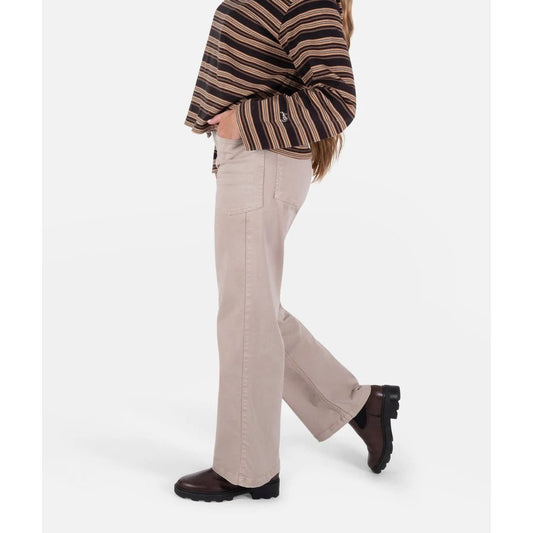
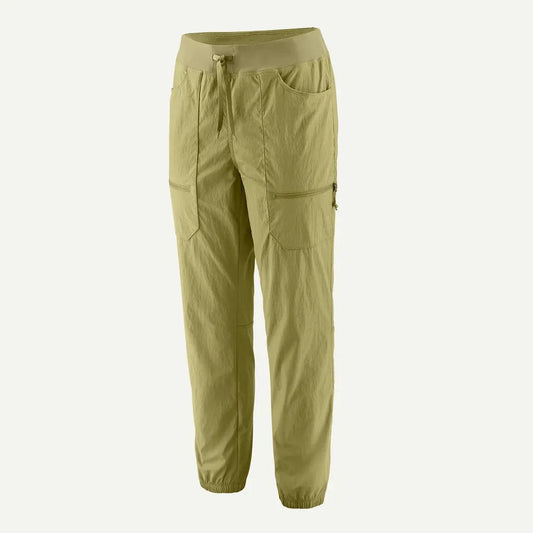
The women's bottoms collection covers the full range of outdoor-ready styles: full-length trekking trousers, roll-up and convertible pants, ankle-cut and capri styles, hiking shorts, skorts, joggers, and waterproof-rated pants for wetter conditions.
Brands like Prana and Kuhl anchor the everyday-technical end, with styles built around stretch woven fabrics, articulated knees, and versatile fits that transition from trail to town. Patagonia and Mountain Hardwear bring performance fabrics and DWR finishes for more demanding outings. For those who prioritize sustainability, Toad & Co's hemp-blend pants and Tentree's eco-conscious styles offer low-impact options without sacrificing function.
Types of Women's Hiking Pants
Women's hiking pants come in several cuts and constructions, each suited to different temperatures, terrain, and hiking styles. Understanding the differences between full-length, convertible, cropped, shorts, and weather-ready options makes it easier to narrow down the right pair for your usual conditions.
Full-Length Trekking Pants
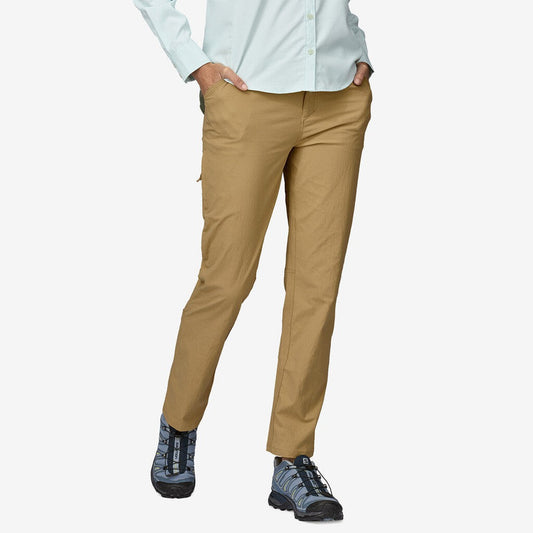
Full-length women's hiking pants are among the most versatile options for hikers who want coverage across different terrain and seasons. Options like the Kuhl Women's Trekr Straight and the Prana Stretch Zion Mid Rise deliver the coverage and abrasion resistance needed for brushy trails and cooler temps, while stretch-woven fabrics keep movement unrestricted on steeper terrain. Full-length styles also offer sun protection on exposed ridges and a barrier against insects on wooded trails.
Roll-Up & Convertible Styles
When conditions shift mid-hike, roll-up and convertible options earn their place. The Kuhl Women's Freeflex Roll-Up Pant converts quickly to a capri without any tools or zippers to fumble with. For hikers who run warm or frequently move between shaded forest and open sun, this added versatility is worth it.
Capris & Ankle Pants
Capri-length and ankle-cut styles, like the Mountain Hardwear Women's Dynama Capri and the Mountain Hardwear Dynama Ankle Pant, split the difference between full coverage and shorts. They're particularly well-suited to spring and fall shoulder-season hiking, where mornings start cool but warm up quickly on the climb.
Hiking Shorts & Skorts
For warm-weather trails and summer day hikes, shorts are often the most comfortable choice. The Kuhl Women's Freeflex Short offers the same technical stretch fabric as the full-length version in a shorter cut. The Aventura Women's Arden V2 Skort provides a skirt-over-shorts construction for hikers who prefer that style without sacrificing practicality on the trail.
Waterproof & Weather-Ready Pants
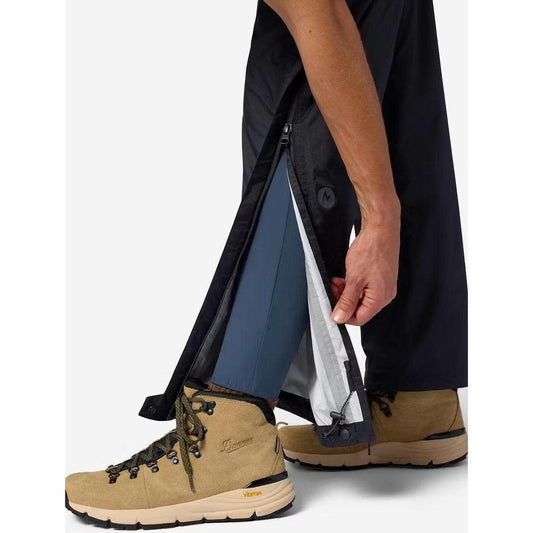
Rain-ready hiking pants - those with waterproof ratings - are worth having on hand for Pacific Northwest trails, shoulder-season hikes in the mountains, or any trip where weather is unpredictable. This collection includes a curated selection of women's waterproof hiking pants designed to block wind and light to moderate rain while maintaining breathability. If you hike through persistent wet conditions, a dedicated waterproof shell pant worn over a lighter hiking pant is often the most flexible approach.
How to Choose Women's Hiking Pants
The right hiking pants depend on how you move, where you hike, and the conditions you expect to encounter. Focus on fabric, fit, pockets, and weather protection to narrow down the right pair.
Fabric and Stretch
Most women's hiking pants use nylon or polyester as their base fabric - both are lightweight, quick-drying, and more durable than cotton. Stretch is added through spandex blends (typically 5–10%) or mechanical stretch weaves that allow a full range of motion without adding weight or reducing durability.
DWR (Durable Water Repellent) finishes are common on technical styles and cause light rain and moisture to bead off the fabric surface. DWR is not the same as waterproofing - it handles brief contact with moisture well but will saturate in prolonged rain. If you expect extended wet conditions, look for pants with a full waterproof membrane.
UPF ratings (typically UPF 30 or UPF 50) indicate sun protection built into the fabric itself - useful for exposed alpine hikes or high-UV environments.
Fit and Waistband
A good fit matters more on a long hike than anywhere else. Articulated knees - a curved or pre-shaped knee panel - allow you to step up onto rocks and scramble without the fabric pulling tight. Look for this feature if you hike technical or steep terrain regularly.
Waistband style is a personal call. A wide, flat elastic waistband distributes pack hip belt pressure more comfortably than a standard waistband, which can dig in under load. Some styles include a partial elastic back panel or an internal drawstring for a more customized fit.
Inseam length varies by brand, so check product specs if you're petite or tall. Several brands in this collection offer multiple inseam options.
Pockets
Pocket quantity and usability is one of the most consistently mentioned factors in women's hiking pant reviews - and for good reason. On trail, you want secure access to your phone, snacks, a trail map, or a lip balm without opening your pack. Look for zippered hip and thigh pockets that stay secure on steep descents, and hand pockets that are actually sized to hold a full phone.
Conditions and Season
Matching your pants to the conditions you'll actually hike in makes a bigger difference than any other single factor:
For warm-weather trails (summer day hikes, desert environments): lightweight, breathable fabrics, shorts, or capris with UPF protection.
For cool and shoulder-season hiking: full-length stretch pants with mild DWR; consider a roll-up style for adaptability.
For cold or wet conditions: waterproof shell pants or fleece-lined styles like the L.L.Bean Women's Vista Camp Pant Fleece-Lined for insulated coverage.
For backpacking and multi-day trips: prioritize lighter weight, packability, and quick-dry performance so a wet pair can dry overnight.
Build Your Trail Outfit
Build Your Trail Outfit
Hiking pants are one part of a layering system. Pairing the right pants with suitable tops and outerwear helps you stay comfortable as trail conditions change.
For the upper body, explore women's hiking tops for moisture-wicking layers and technical shirts, while women's jackets and vests add protection when wind or rain moves in. On colder outings, layering a baselayer underneath your hiking pants can also help extend the comfort range of lighter-weight styles.
For your footwear, women's hiking boots provide support and traction on more technical terrain, while lighter hiking shoes work well for easier trails. In wet, muddy, or snowy conditions, hiking gaiters can also help keep debris and moisture from entering around the boot cuff.
Why Shop at Appalachian Outfitters
Appalachian Outfitters brings together established outdoor brands with a focus on clothing and gear built for real outdoor use. The selection ranges from technical hiking pants designed for demanding trails to versatile outdoor styles that work just as well for everyday wear.
With a broad range of brands and styles in one place, it's easy to compare different fits, fabrics, and features to find the right pair for your needs. Whether you prefer lightweight stretch pants, convertible styles, or weather-ready layers, you can explore different options without being limited to a single brand. You can also shop related hiking clothing and gear across the store to build a complete setup around y
Caring for Your Hiking Pants
Technical hiking pants last longer with a little attention:
Machine wash on cold with a gentle or technical-fabric detergent. Avoid fabric softener - it degrades DWR coatings and can reduce moisture-wicking performance. Tumble dry on low, or air dry. Heat can damage stretch fibers and DWR finishes over time.
To restore a DWR finish that has begun to wet out (the fabric absorbs moisture rather than beading it), run the pants through a warm dryer cycle or use a DWR-restoring spray product after washing.
Avoid storing damp pants in a stuff sack or bag - always dry fully before packing away.
Frequently Asked Questions
Here are answers to common questions about women's hiking pants, including fabrics, waterproofing, fit, sizing, and everyday use.
What fabric is best for women's hiking pants?
Nylon and polyester are both solid choices. Nylon tends to be slightly more abrasion-resistant and has a smoother feel; polyester dries a bit faster and holds color well. Both work well on trail - the difference matters most in high-wear situations like off-trail scrambling.
Are waterproof hiking pants worth it?
They're worth it if you hike in consistently wet climates or unpredictable mountain weather. For drier conditions, a pants with a DWR finish handles occasional rain without the added weight of a full waterproof membrane.
What's the difference between DWR and waterproof?
DWR (Durable Water Repellent) is a surface treatment that causes light rain to bead off. It saturates in sustained rain. Waterproof refers to a laminated or bonded membrane - like Gore-Tex - that blocks water penetration even in extended wet conditions.
How should hiking pants fit?
You should be able to do a full squat without the fabric pulling across the knees or seat. The waistband should sit comfortably without gapping at the back when you bend forward. If you wear a pack with a hip belt, a slightly higher rise and wider waistband helps prevent pressure points.
Can hiking pants be worn for everyday use?
Many styles in this collection - particularly the Prana, Kuhl, and Toad & Co lines - are designed to function equally well in town. Stretch-woven fabrics and cleaner silhouettes make them easy to wear beyond the trail.
How do I know what size to order?
Each brand sizes slightly differently. Use the individual product's size chart, which lists waist and hip measurements, rather than relying on generic sizing. Several styles also offer multiple inseam lengths to accommodate petite and tall fits.